
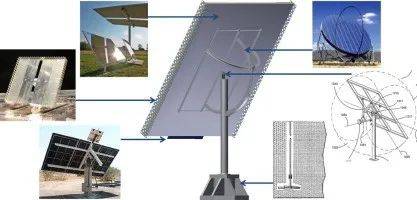
A heliostat is the first step in enabling solar power generation in a tower CSP plant. It follows the movement of sunlight and continuously and accurately reflects sunlight to the receiver. As we know, sunlight direction changes about 180 degrees over a day, and the position of sunlight also varies under different weather conditions, while the heliostat must always ensure that light is reflected to a specified position.
Wherever there is precision motion control, there is Trinamic (TMC)! For TMC, in heliostat sub-project applications, whether FOC control or stepper multi-axis control, corresponding solutions can be matched.
Heliostats placed at different positions have different angles and movement trajectories. Therefore, when implementing automatic tracking control for heliostats, they are both a whole and individual entities. This technology is not difficult to implement, but due to different heliostat designs and different types of motors used, the drive solutions also differ greatly.
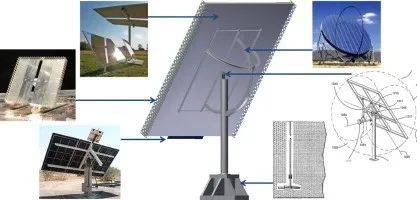
For example, currently common heliostats use push-pull rod motors, while others use vertical rotation, but both are multi-axis motion tracking. According to the solution provided by Trinamic, a controller can be installed on each axis, or a dual-axis controller can be used to control two motors in linkage, such asTMC5072 motor control chip。
HelioDrive™ drive solution
Speaking of heliostat applications, Trinamic has also independently developed an innovative drive solution for mounting on heliostats: HelioDrive™. One unit must be installed on each axis to provide a highly efficient motor solution for solar positioning and tracking.

As we can see, HelioDrive™ integrates the motor, sensors, encoder, positioning algorithm, and other components into a single box. Despite its small size, it delivers a plug-and-play solution that is easy to install and very designer-friendly. According to the introduction, it not only achieves high resolution and high precision but also supports multiple interfaces such as RS-485, CAN, and USB.
Heliostat Power Supply Methods
Ordinary heliostats are actually powered by the grid or batteries, and charging is quite cumbersome. Heliostats emphasize energy efficiency and innovation, and many heliostat projects have now achieved self-sufficiency by using photovoltaic cells for power supply. These can be installed locally to meet the motion control needs of heliostats in daily operation.
Operating Environment
The operating environment of a heliostat is self-evident; it may face high temperatures for extended periods. Although good thermal insulation and reflection measures can reduce climate-related damage to the interior of the heliostat, it must still be ensured that it can work in such an environment over the long term. Trinamic's motor driver chips have a temperature range of -20°C to +75°C, along with long service life and excellent performance, representing high performance among chips.
Summary
Automated control is intended to reduce labor costs while maximizing efficiency. Therefore, wireless management and automatic control of heliostats are indispensable technologies. Trinamic brings you convenient solutions, enabling you to make greater changes in cost optimization while also greatly improving efficiency.