
Embedded Motion Control
Author: Trinamic
Embedded motion control is a major emerging trend driven by the interconnectivity of many different systems, such as new edge device applications in the IoT and Industrial IoT, as well as other trends such as increasing system integration and miniaturization, and the proliferation of mobile/wearable consumer electronics—and artificial intelligence.
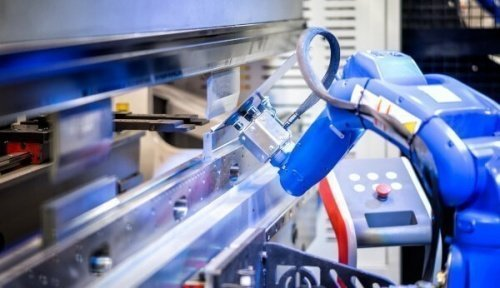
Several different application-related and user (engineering)-related trends are together driving the increase in embedded motion control. Many of these trends were already occurring even before the recent emergence of IoT and IIoT edge devices.
Simultaneously increasing miniaturization/integration and automation: One of the most important trends, and one that influences many others, is the increasing miniaturization and integration of systems, components, and assemblies, while they are also becoming automated. The same is true for new types of micromotors with very small form factors. According to a report by P&M Market Research, partly due to increased demand for micromotors, demand for stepper motors continues to rise overall. Although industrial machinery has always been the largest market for stepper motors, the report says their growing use in medical devices, desktop machine manufacturing, or home automation will drive market growth through 2023.
Other applications of this trend include 3D printing and consumer-oriented IoT-connected devices. The latter group includes connected home devices, such as curtains, blinds, and cameras for smart home systems; environmental controls, such as connected thermostats; appliances; robots; drones; automobiles; and consumer devices that require stepper motors. For wearables, some examples are small portable insulin pumps, which contain small stepper motors and also require wired or wireless interfaces and are battery-powered, and virtual reality goggles.
Fostered by the Industrial IoT
IIoT (Industrial IoT) has fostered the development of interconnectivity: networks are growing. Bandwidth is growing. The volume of information exchanged over all networks (including over the Internet) is growing. Global semiconductor and technology companies are placing their highest priority on solutions for networking, data centers, and high-bandwidth communications technologies—global telecommunications and media, industrial control applications, and automotive and home networks.
To keep pace with this development, smarter systems are needed, including motion control and drive solutions at the network edge, as well as standardized APIs and standard interfaces so that these systems can understand and communicate with one another.
AI: Artificial intelligence is a trend on the algorithm side, representing a fundamental change in software and dedicated hardware. AI enables intelligent and autonomous machines; it enables systems to make decisions based on available “information” without human control; it enables learning/adaptive machines; and it enables interactive machines. Thanks to AI, new application areas are emerging and will become commodities in a few years, such as advanced robotics in factory and medical applications, the transportation and delivery industry, or toys. However, to actually interact with the real physical world—converting digital information into physical motion and vice versa—AI-based systems need smart actuators. Such smart actuators are examples of embedded motion control systems.
Embedded motion control does not just mean using embedded systems for motion control tasks, or implementing motor and motion control functions in highly integrated microchips. Embedded motion control means more than motor control. It means a microcosm of the entire motion control system.
Examples of Embedded Motion Control
Motion control design is no longer difficult or complex: instead, it has become a set of mainstream functions or building blocks that help designers reduce development time. We can now embed functions and submodules (motors, sensors, enclosures, physical interfaces) and logic (algorithms, communication stacks, dedicated hardware accelerators) according to the engineer's specific application requirements.
Examples of increased integration and miniaturization can be found in Trinamic's smart stepper controller + driver IC family, such as the TMC5130/TMC5160 integrated motor driver and motion controller ICs. The TMC5072 can even drive two motors directly. The TMC8670 dedicated EtherCAT motion controller IC is an example of the highest level of integration. It is an SoC with a field-programmable gate array (FPGA) and an internal real MCU, including an EtherCAT real-time bus interface, protocol stack, and servo motor control in a single device.
If you consider all these trends, such as AI, IoT, and IIoT, it is clear that they generally lie more on the processing and communications side. However, many systems need a bridge to the real world. When people think of the Internet of Things, they think of sensors and data (the cloud). However, it is actuators that give IoT meaning and make life more comfortable by enabling the physical cloud, which consists of all physical devices connected to the Internet. Embedded motion control is the bridge that connects the digital to the physical.