
In sensing technology, a common dilemma is that as distance increases, signal accuracy degrades; and as the environment becomes harsher, device stability is tested. The “simple” Hall-effect switch becomes a troublesome weak link in the system—signals attenuate and distort over long lines, EMC interference causes the controller to read false pulses, and accidental reverse power connection can burn out the entire board.
The MT72XX series launched by NOVOSENSE, as China’s first high-performance 2-wire current-output Hall-effect switch sensor, provides a solution that simplifies complexity: with a 2-wire current-output architecture that uses “one less wire,” in 3-meter long-harness scenarios, the current-mode signal output improves the signal-to-noise ratio by 40% compared with conventional 4-wire solutions; the built-in 100 nF decoupling capacitor enables EMC performance to reach the ISO 11452-2 Level 4 standard, and the number of BOM components is reduced by 60%.
1. Internal Architecture and Core Technology
Conventional Hall-effect switches are almost all open-drain voltage outputs: three wires—VCC, GND, and OUT—with an external pull-up resistor, outputting high and low levels. Once the wiring is extended, voltage signals on long lines are easily coupled by electromagnetic interference, signal edges at high-impedance nodes are slowed by parasitic capacitance, and pulse loss and false triggering occur frequently. The classic countermeasures are to add filtering and interface chips at the receiving end, but each additional stage also increases BOM cost, PCB area, and failure rate.
In application, the MT72XX uses a 2-wire interface, saving one wire compared with conventional open-drain output switches, and outputs magnetic-field detection results by modulating the current level in the power supply loop. Because current signals inherently have low impedance and high interference immunity, even after transmission through several meters of harness, signal integrity remains far superior to that of voltage signals. This architecture breaks through the signal attenuation and EMC bottlenecks of conventional Hall-effect switches in long-harness applications.
In the internal signal chain, the MT72XX integrates a complete processing path: an on-chip Hall voltage generator senses magnetic-field changes → a small-signal amplifier performs pre-amplification → a dynamic offset cancellation system continuously cancels the amplifier’s own offset → a Schmitt trigger shapes the signal for output. Among these, dynamic offset cancellation is the core for ensuring consistency of the switching threshold over the full temperature range. The Hall element and amplifier generate DC offset voltages due to temperature drift and package stress, which are superimposed on the weak Hall signal and cause the switching point to drift. The MT72XX uses internal chopper-stabilization technology to continuously sample and automatically cancel the offset at an 800 kHz chopping frequency, compressing the residual offset voltage to an extremely small level and ensuring that the magnetic switching threshold remains almost unchanged under both extreme conditions: low-temperature cold start and high-temperature continuous operation.
In addition, MT72XX integrates an LDO voltage regulator supporting 2.8V to 26V, output clamp diodes, reverse power protection circuitry, and a 100nF decoupling capacitor. In conventional designs, this decoupling capacitor must be placed close to the chip's VCC pin and is a standard component for suppressing power supply noise and improving EMC and ESD performance. MT72XX integrates it on-chip, optimizing the decoupling path at the wafer level for better high-frequency noise bypassing. This "chip-level integration of peripheral components" makes the design extremely simple.
II. Parameter Analysis
The core parameters of MT72XX are designed to meet performance and reliability requirements in real-world applications.
1. Power Supply and Protection
MT72XX has an operating voltage range of 2.8V to 26V, covering voltage ranges from 3.3V low-voltage logic to 24V commercial vehicle batteries, and can adapt to various voltage platforms. More practically, its -30V reverse power protection capability addresses reverse power connection, a common human error during assembly and debugging. Conventional solutions require an external series diode at the board level for reverse connection protection, but the diode forward voltage drop wastes valuable voltage headroom, especially in low-voltage scenarios. MT72XX integrates reverse protection directly on-chip, eliminating external protection components and avoiding power and voltage losses caused by diode voltage drops, thereby simplifying the system FMEA (Failure Mode and Effects Analysis) design.
2. Power Consumption and Sampling Frequency
The supply current of MT72XX depends on the product type: for the latching type, the typical supply current after magnetic field triggering is 4.0mA, while for unipolar and omnipolar types it is 2.5mA. The typical value of 2.5mA is a key parameter for extending battery replacement intervals in applications such as water meters and door magnetic sensors that require year-round standby.
The difference in power consumption comes from different internal sampling frequencies: the latching type uses 100kHz sampling to accurately capture rotor position in high-speed rotation scenarios; unipolar and omnipolar types sample at 25kHz, significantly reducing power consumption while meeting the response requirements of most proximity detection and position switch applications.
3. Response Speed
The typical output rise and fall times of the MT72XX are 1.0 µs. This means the output signal edges are steep enough that, in high-speed brushless DC motors, even at speeds of tens of thousands of RPM, the sensor can still output clean square-wave signals with accurate phase. If the rise time were stretched to the order of tens of microseconds, the motor controller could misinterpret the slow slope of the signal as an invalid level at high speed, causing commutation timing errors and, in severe cases, motor step loss or power transistor burnout.
4. Undervoltage Lockout (UVLO)
The MT72XX includes a built-in undervoltage protection mechanism: when VCC drops below 2.6 V, the chip actively locks the output and no longer responds to magnetic field input; when VCC recovers above 2.8 V, the chip restarts normally. During vehicle startup or system power-up sequencing, the supply voltage may briefly sag. If the sensor outputs an indeterminate level at this time, the controller may read false pulses, leading to position misjudgment or fault interrupt triggering. The UVLO mechanism ensures that the chip maintains a defined output state during power supply instability, effectively safeguarding the logic safety of the entire system during power-up and power-down.
5. ESD Protection
The MT72XX's HBM (Human Body Model) ESD protection rating reaches 12 kV. This value far exceeds the 2 kV to 4 kV level of general industrial-grade chips and is also higher than the 8 kV baseline of most automotive-grade chips. High ESD tolerance translates directly into two practical benefits: in SMT placement and manual assembly, defect rates and board scrap rates are significantly reduced; in daily use of end products, the device will not fail due to electrostatic discharge when subjected to human touch, harness plugging/unplugging, and similar scenarios. This parameter is an important support for automotive-grade Hall-effect switches to reduce failure rates and after-sales risks in mass production.
6. Temperature Range
The maximum operating ambient temperature range of the MT72XX series covers -40°C to 150°C, corresponding to AEC-Q100 Grade 0, the highest automotive-grade level, and is suitable for high-temperature core areas such as the engine compartment, transmission, and braking system.
III. Response Modes and Packaging
The MT72XX series provides three magnetic field response modes—unipolar, omnipolar, and latching—with sensitivity thresholds covering ±10 mT to ±100 mT, suitable for different magnetic circuit designs:
- Latching type (Latch, model suffix -XLL/-XLH):It requires an alternating N/S magnetic field to switch the output state. When the S-pole magnetic field strength exceeds the BOP (operating point) threshold, the output toggles; after the S pole is removed, the output state is retained until the N-pole magnetic field exceeds the BRP (release point) threshold (absolute value), at which point it toggles again. It is suitable for scenarios such as brushless DC motor (BLDC) rotor position detection and encoder pulse counting. In the suffix, L indicates the initial output at power-up is low, and H indicates the initial output at power-up is high. During selection, it must match the controller's expected default state at the instant of power-up to ensure safe system startup logic.
- Unipolar type (Unipolar, model suffix -XUL/-XUH):It responds to only a single magnetic pole. Taking the S-pole-sensitive type as an example, when the S-pole magnetic field strength exceeds BOP, the output turns on; after the S pole is removed (magnetic field below BRP), the output turns off. The unipolar logic is intuitive: magnet approaches → switch closes, magnet leaves → switch opens. It is suitable for scenarios such as door/window magnetic switches, limit detection, and cylinder in-position confirmation.
- Omnipolar type (Omni-Polar, model suffix -XOL/-XOH):It does not distinguish between N pole and S pole; triggering occurs when either magnetic pole approaches and exceeds the BOP threshold. The omnipolar type is insensitive to the mounting orientation of the magnet and is more tolerant in assembly processes. It is suitable for scenarios such as smart water/gas meter counting, laptop sleep switches, and pipeline proximity switches.
In terms of packaging, the MT72XX offers three options, all RoHS compliant:
- SOT-23:Standard surface-mount package, compact size, suitable for applications with limited PCB space;
- Thin SOT-23:Height is further reduced to below 1.15 mm, allowing it to fit into gaps in ultra-thin modules;
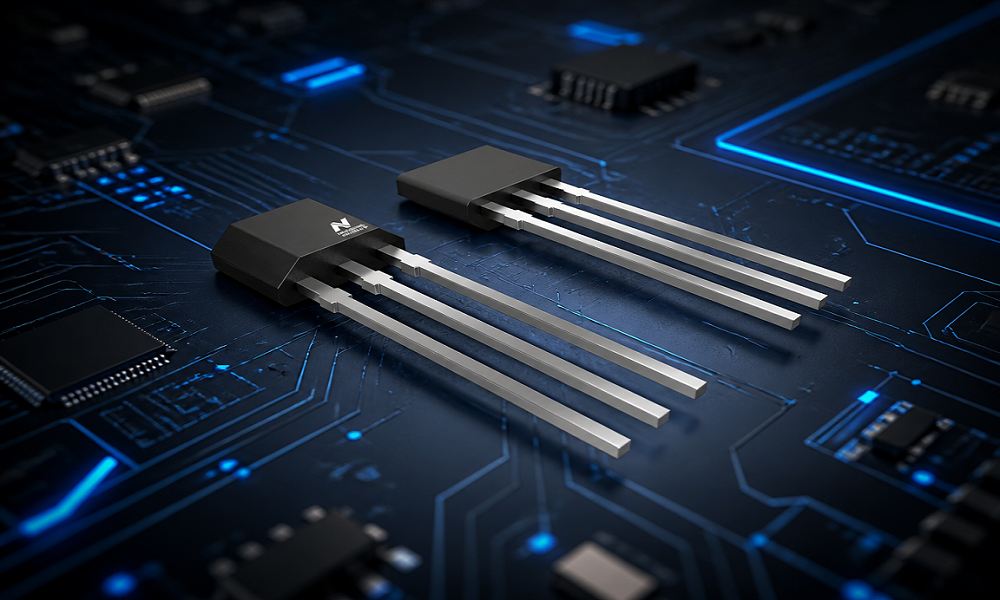
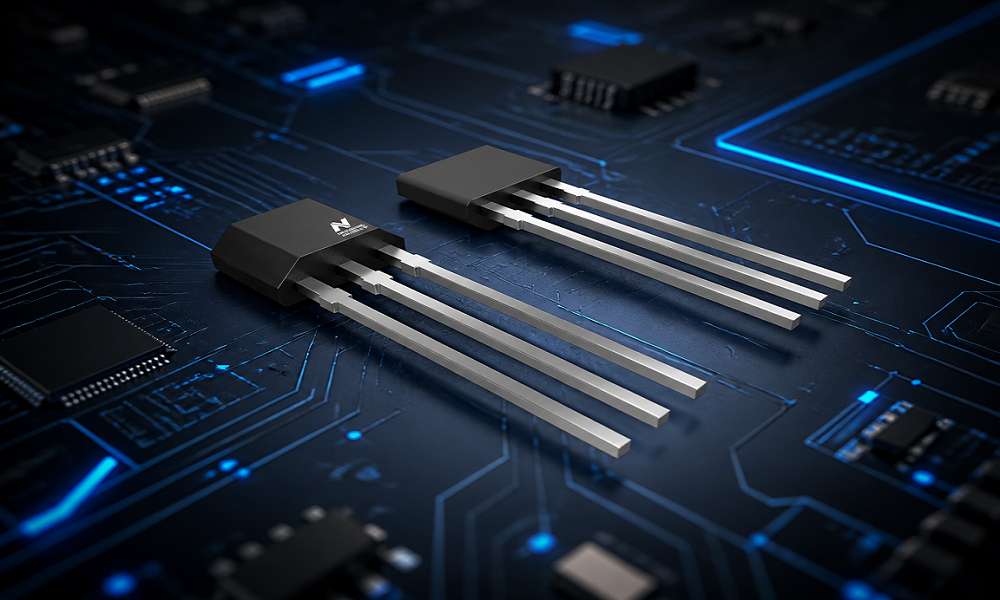
- Flat TO-92:Traditional through-hole package, with bendable leads and a fixed magnetic-sensitive surface orientation, suitable for industrial sensor node designs requiring remote harness connections or a fixed air gap between the sensor probe and the magnet.
IV. Application Scenarios
Automotive electronics is the main application scenario for the MT72XX: seatbelt buckle detection, anti-pinch for power windows and tailgate position sensing, BLDC commutation sensors (oil pump/water pump/fan), seat motor position memory, gear position sensors, etc. The chip's 2-wire current output architecture and automotive-grade reliability perfectly suit the long wiring harnesses and high-interference environments of automotive body electronics.
It is equally suitable for industrial automation: rotation counting in flowmeters and encoders, magnetic cylinder position switches, elevator leveling detection, and collaborative robot joint limit detection. The MT72XX's wide temperature capability (-40 to 150°C) enables reliable operation in scenarios such as outdoor cabinets without air conditioning and sensor nodes close to motor windings.
In home appliances and consumer electronics, omnipolar types are particularly valuable in non-magnetic counting solutions for smart water/gas meters—the magnet can be mounted in any orientation, greatly reducing assembly process requirements. Washing machine door/lid status detection, robot vacuum cliff sensors, power tool speed-control triggers, and two-wheeled electric vehicle motors are all typical applications.
In communications and drones, scenarios such as homing/zero-return positioning of 5G base station antenna drive mechanisms, gimbal limit detection, and drone cargo compartment lock detection also have rigid requirements for sensor reliability and weather resistance.
V. Conclusion
In an era of constantly expanding sensor usage and ever-increasing wiring harness complexity, the value of a good chip lies not only in what functions it “adds” but also in what it “removes”—one fewer signal wire, one fewer set of BOM components, one fewer series of potential failure modes. The MT72XX series solves these problems inside the chip through a 2-wire current-output architecture, dynamic offset cancellation technology, and a full-link protection design covering reverse connection through short circuit, enabling engineers to obtain reliable position detection results with simple peripheral circuits.For more information about MT72XX series products or to request samples, please contact the official authorized distributor: sales@chiplinkstech.com; Contact: Engineer Chen, 13924675549 (same number on WeChat); WeChat Official Account: Zhilian Micro - Motor Control Chips, providing part selection services and technical support.

Appendix: Sample Request

WeChat Official Account