
Trinamic has upgraded the evaluation system: power supply voltage increased to a maximum of 70 V, USB-C interface
Trinamic launched a modular evaluation system in 2015, enabling engineers without motion control experience to quickly test different system designs. The modular evaluation system consists of 3 parts:
1. Landungsbrücke MCU main control board,
It includes an NXP (Freescale) MK20 Cortex-M4 processor; processor model MK20DX256VLL10.
The main control board is universal and can be used with other evaluation boards.
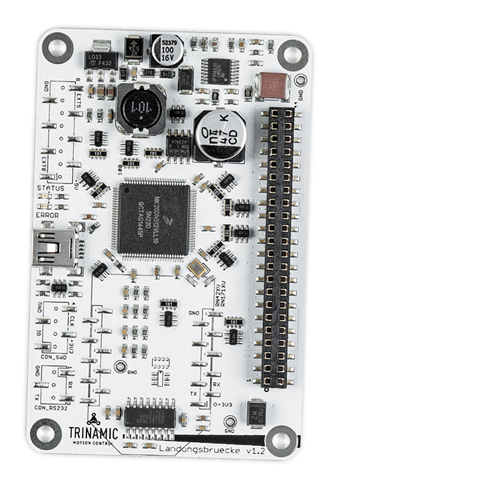
2. Eselsbrücke connection board
Eselsbrücke is the connector board for the Trinamic evaluation board system. Via the probes on the bridge board, all signals between the MCU and the corresponding evaluation board can be accessed. This allows quick and easy diagnosis of your application.
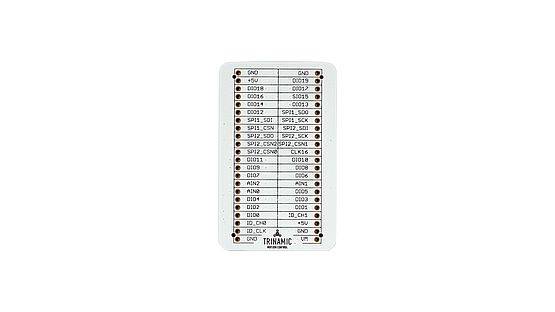
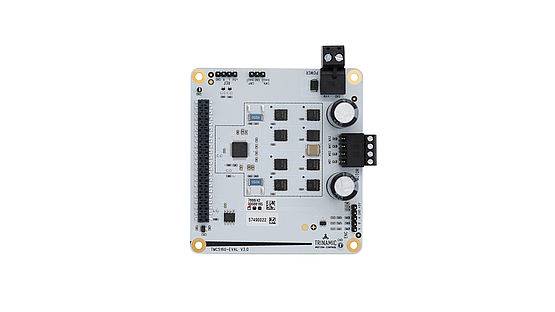
3. Evaluation Board
It contains the motor control chip or motion control chip of your choice and all components required for driving, such as the TMC5160-eval evaluation board below:
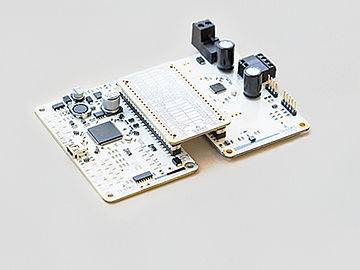
The evaluation kit consisting of three boards combined is as follows:
Combined with Trinamic's integrated development environment TMCL-IDE™, configuration is very simple. Connect the computer to the main control board via USB-C, open TMCL-IDE to set parameters, and export to TMCL-PC or C++,
Years ago, we noticed the trend in software engineering toward an increasing focus on the application layer and user interface. With the introduction of the Fourth Industrial Revolution, this trend will only grow. Companies want their teams to focus on their core expertise and develop groundbreaking applications, says Trinamic founder and CEO Michael Randt.
The evaluation board and code base can be adapted in simple steps, enabling engineers without motion control experience to implement industry-leading motion and motor control technology in the most effective way.
The second-generation Landungsbrücke main control board inUpgraded to 70V voltage, USB-C interface. Opens the door to advanced motion control technologies from Trinamic such as StealthChop™, StallGuard™ (sensorless stall detection and mechanical load measurement), and CoolStep™ (current-saving control).